Stay Updated with Agro Cultures News
Harnessing the Sun’s Endless Power to Sustainably Transform Agriculture
Ready to harness the power of the sun?

Tubes sell. I’ve watched a “meh” product jump price brackets just because the pack stopped feeling flimsy in the hand and started feeling like a little drum—rigid, quiet, confident, the kind of thing buyers don’t want to toss. Why does that work? Because consumers are simple. And retailers are harsher.
Here’s the ugly truth: “paper tube packaging manufacturing” isn’t one clean step-by-step flow you can paste into a brochure, it’s a messy pile of tolerance choices, glue chemistry, winding discipline, liner compromises, and closure drama that either clicks together… or slowly bleeds money through rework and returns. It works. Usually.

And yes, you can absolutely buy a tube that looks premium in photos and still has a lid that sticks, a seam that lifts, and edges that fuzz out like cheap craft paper after two weeks on shelf. Ask me how I know.
Most of the market lives in two camps: spiral-wound and convolute-wound. That’s the fork. That’s the fight.
Spiral winding is the speed demon—strip stock, angled ply, mandrel, go. Convolute is the “don’t embarrass me in Sephora lighting” option—sheet stock rolled straight, cleaner wrap behavior, better edge density, usually slower and priced accordingly. So when a supplier says “same quality,” I frankly believe they’re hoping you don’t own calipers.
But brands still send a cute mockup, a diameter, a height… and vibes.
If you do that, you’re basically outsourcing decisions to whoever runs the winding line that day, and that person is optimizing for speed, glue usage, and scrap—not your retail presentation, your filling line, or the customer who will rage-click a one-star review because the lid won’t come off cleanly. Three-word reality: write tolerances.
What I’d demand upfront (because I’m tired of preventable defects):
If you need a baseline structure to stop the back-and-forth, start with paper canister packaging and then get picky—on purpose.
Yet “sustainable paper tube packaging” is the phrase everyone wants to slap on the homepage, even when the liner is a mixed-material sandwich and the lid has a plastic insert nobody mentions.
Typical build (what really ends up on the BOM):
One long sentence, because this is the trap: if you choose a fancy outer wrap and skip the boring stuff—moisture content control, glue solids consistency, cure time, and how the edges are finished—you’ll get tubes that look great in the factory and then oval out in transit like they’re trying to escape their own geometry. It happens. Often.
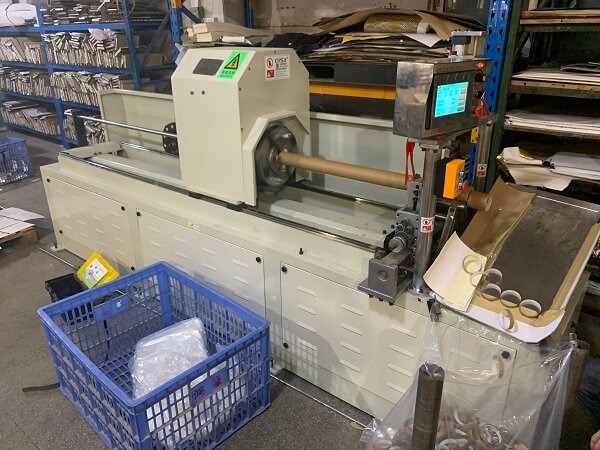
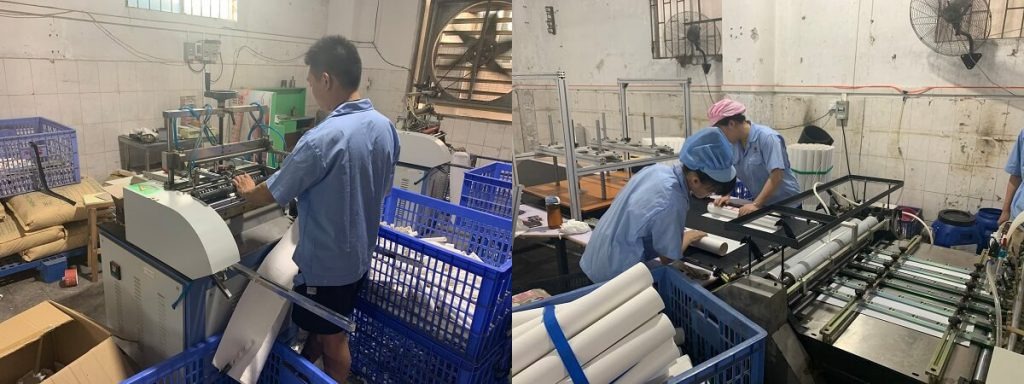
This is the core “how paper tubes are made” moment, and it’s brutally mechanical.
And here’s where outsiders miss the point: winding is only “cheap” when you tolerate sloppy ID/OD, glue squeeze-out, and variable ply tension. Tighten the spec and suddenly spiral-wound doesn’t feel cheap anymore—because now the factory has to behave. Do they want to? Not unless you pay—or police.
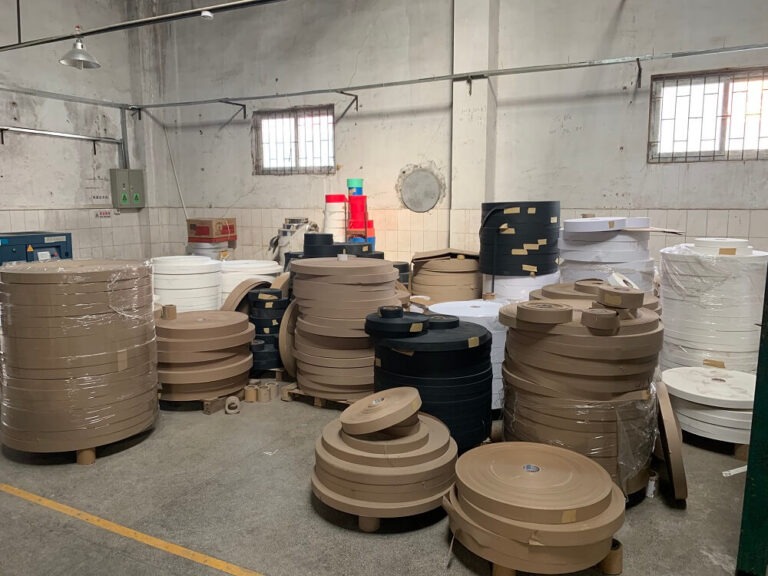
So the tube cures. Then it gets cut. Then the edges get cleaned up (or… they don’t).
This is where the project either turns into “wow, nice pack” or “why does it feel rough?” Fuzzy edge = cheap. Burrs = cheap. Lid drag = returns.
Common failure modes I see over and over:
If you want to see what “tolerance stack-up” looks like in real life, study builds like metal-lid paper tube boxes for tea packaging—a metal lid doesn’t forgive a sloppy cylinder.
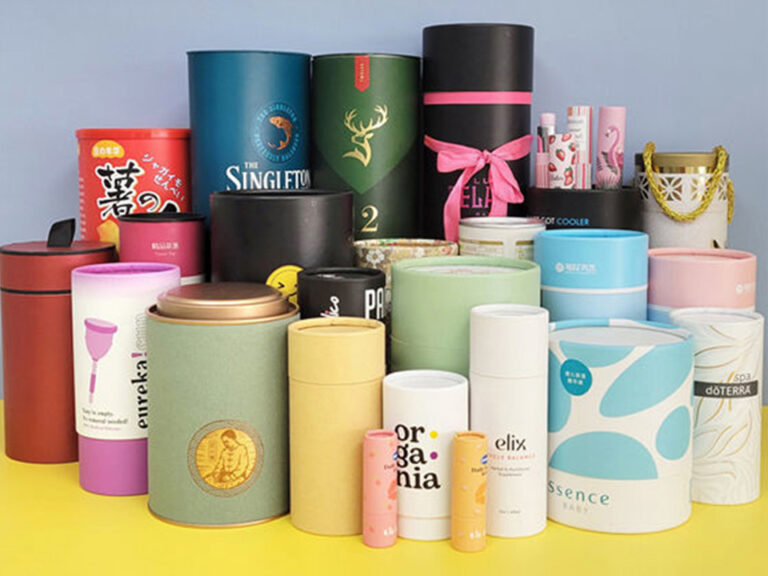
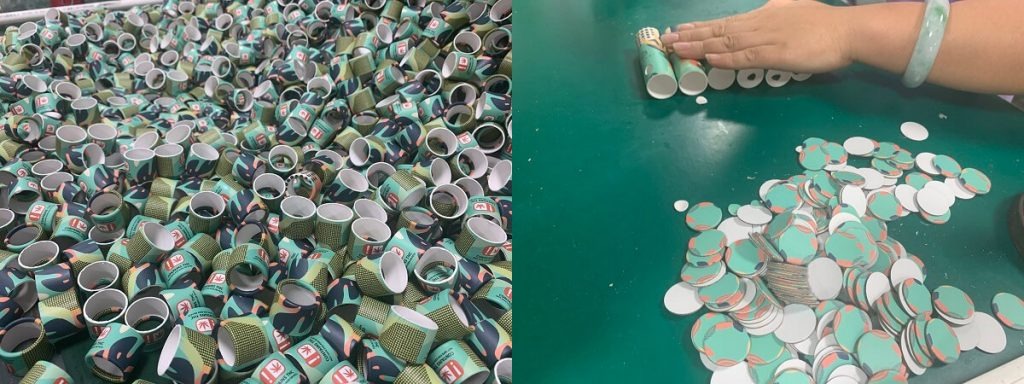
But let’s be honest: most “luxury” tube decoration is a wrap, not direct print. That’s not bad—it’s just reality.
You’ll usually see:
Cosmetics is where you get punished. Tiny scuffs become huge under retail lighting, and a wrap that’s a hair mis-registered makes the whole thing look like a counterfeit. If that’s your category, benchmark cosmetics paper tubes and don’t pretend you can wing it.
Here’s the part nobody wants to budget for: barrier.
Powders, teas, oils, aromatics—if you don’t respect the liner, the tube becomes a perfume diffuser (not in a good way). Awkward.
Options you’ll run into:
And regulation isn’t getting softer. The EU has been pushing packaging waste reduction and stricter packaging rules; a major milestone was the Council and Parliament agreement in March 2024, followed by formal adoption in December 2024.
Closures are where your “premium” story either lands or collapses.
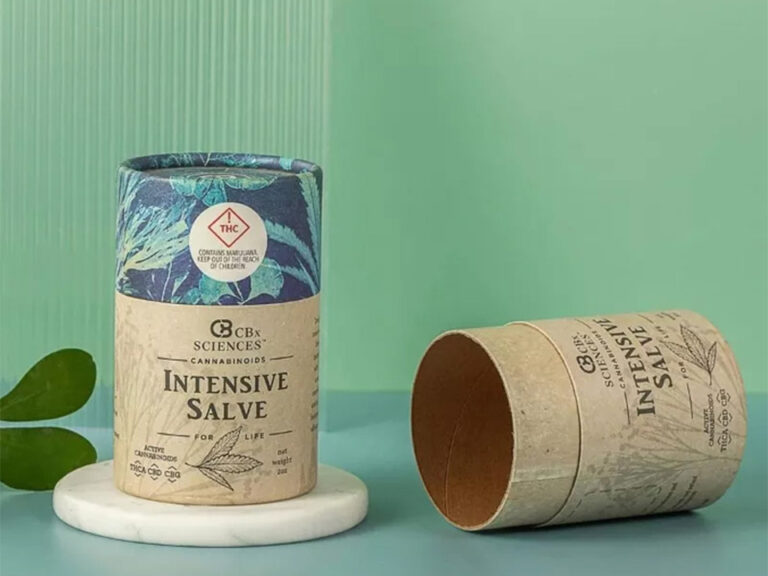
If you’re in regulated stuff, don’t play around—look at child-resistant tubes and treat that whole closure system like a compliance object, not a design flourish.
Costs move. Fast. In January 2024, Reuters reported spot container rates jumping hard during Red Sea disruption—Shanghai to U.S. West Coast was cited as up 43.2% week-on-week to $3,974 per 40-foot container, and those spikes hit packaging buyers like an unplanned tax. You can’t “negotiate” the ocean.
And if you’re sourcing from China, you’re also buying policy risk. In 2024, the Office of the United States Trade Representative issued proposed Section 301 tariff modifications (May 2024) and then finalized actions after the statutory review (September 2024). That matters because a tariff change doesn’t care that your tube is “eco.”
I’m going to say the quiet part out loud: the “best sourcing region” conversation is usually people arguing over unit price while ignoring lead-time volatility, QA drift, and the real killer—what happens when one component is off by half a millimeter and you’re now hand-fitting lids in a warehouse. Painful. Predictable.
Here’s the comparison I use when someone tells me “all Asia is the same” (it’s not). Ranges below are the typical quote patterns I see repeated in the market, not guaranteed pricing.
| Region | Unit cost tendency (vs US) | Typical production lead time | Freight/port volatility | Quality consistency (mid-tier factories) | Tariff / trade-policy exposure (US-bound) |
|---|---|---|---|---|---|
| China (coastal) | Low to mid | 20–35 days | Medium to high | High variance (best are excellent, average is sloppy) | Higher (Section 301 uncertainty) |
| Vietnam | Mid | 25–45 days | Medium | Improving, but capacity constraints show | Medium |
| India | Mid to high | 30–55 days | Medium | Mixed; strong on paperboard, weaker on luxury finishes | Medium |
| Eastern Europe | High | 20–40 days | Lower (EU lanes) | Often tighter process control | Lower for EU retail, varies for US |
| Mexico | High | 15–30 days | Lower for US | Good for simple builds; premium finishing varies | Lower (depends on HS codes and compliance) |
| USA/Canada | Highest | 10–25 days | Lowest | Most predictable | Lowest |
If you want a tube that looks premium and runs cleanly on a packing line, you’re usually picking two: speed, cost, tolerance. Pick three? Pay later.
Three words: write tolerances. And yes, I’m repeating myself—because this is where projects go to die.
A tube project dies in silence because nobody measured ovality, lid fit force, seam lift, or rub resistance before the containers were filled and shrink-wrapped, at which point your “simple packaging” becomes a product recall-shaped headache. Messy.
If you don’t already have it, build your spec and sampling plan into your production workflow using custom paper tube packaging production services and put the tests in writing:
Also: sustainability claims. If your marketing team wants “plastic-free,” make them sign off on the barrier reality, then route it through your sustainability policy page so you’re consistent. Sustainable paper tube packaging practices should match what you ship, not what you wish.
Words can cost money. In September 2024, Rob Bonta announced a lawsuit against ExxonMobil alleging deception around plastic recyclability. So yeah—don’t get cute with your claims.
When you pitch “paper canister packaging manufacturing” as greener, keep your language tight: what’s paper, what’s not, what the consumer can do, and what you’ve actually tested. Because if regulators are willing to litigate “recyclable,” your product page copy isn’t magically protected.
And market pressure is real, not just vibes: Reuters noted in 2023 that demand for paper packaging has risen sharply over the long term and that major brands are pushing supply chain changes through programs like Canopy’s Pack4Good.
If you want to see how specs translate to actual structures (not theory), here are three that line up with real-world constraints:
Different product, same lesson: the tube body is only half the job. The closure + liner combo decides performance. That’s the whole trick.
What is paper tube packaging manufacturing? Paper tube packaging manufacturing is an industrial conversion workflow that laminates multiple paperboard plies with controlled adhesive, winds them on a mandrel to a specified ID/OD and caliper, then adds print wraps, liners, and closures so the cylinder performs in retail handling, filling, and distribution. After that definition? My bias: treat it like engineered packaging, not “pretty paper,” or you’ll buy defects on purpose.
What materials are used in paper canister packaging? Paper canister packaging is typically built from kraft or coated paperboard plies bonded with water-based adhesives, then paired with a paperboard, tinplate, or wood lid and, for food or powders, a liner like aluminum foil or polymer film to control moisture, aroma, and grease migration. If someone says “all paper,” make them show the liner stack-up (and the lid insert) before you repeat it.
Spiral-wound vs convolute-wound: what’s better for retail? Spiral-wound tubes are cylinders formed by winding paper strips around a mandrel at an angle, while convolute-wound tubes are made by rolling a wide sheet straight onto the mandrel; spiral is faster and cheaper, convolute looks cleaner and holds tighter tolerances for premium retail. If your shelf position is premium and your lid fit has to feel “snap-right,” convolute saves arguments.
What quality control specs should I demand for custom paper tube packaging production? A paper tube QC spec is a written set of measurable tolerances—ID/OD, wall thickness, ovality, seam lift, top-load strength, and print rub resistance—plus sampling rules, test methods, and acceptance limits, so the factory can’t swap materials, loosen glue, or ship “close enough” parts. If it isn’t measurable, it isn’t enforceable (and they’ll absolutely interpret “close enough” in their favor).
How does sourcing region change total cost and lead time? Total landed cost for retail paper tubes is the sum of factory price plus freight, duties, tariffs, compliance testing, and rework risk, and it swings by region because port congestion, shipping crises, and trade policy can add weeks of delay or double-digit percentage costs overnight. The Red Sea rate spikes in early 2024 are exactly the kind of “surprise” that turns a cheap quote into an expensive launch.
Is sustainable paper tube packaging automatically recyclable? Sustainable paper tube packaging means the tube is designed for real recovery—high paper fiber content, minimal plastic or mixed-material barriers, and credible sourcing claims—while still meeting performance needs, because green-sounding coatings and labels can quietly make the whole pack harder to recycle. Translation: your liner and lid usually decide the recyclability story more than your outer wrap ever will.
If you want a tube that survives retail handling, ships without warping, and doesn’t turn into a tariff or claim-compliance problem later, stop starting with “make it pretty.” Start with a spec.
Build your design through custom paper tube packaging production services, sanity-check the sustainability language on Sustainable paper tube packaging practices, and then pick the right structure for your category—coffee, cosmetics, or regulated goods—before you lock the PO.