Stay Updated with Agro Cultures News
Harnessing the Sun’s Endless Power to Sustainably Transform Agriculture
Ready to harness the power of the sun?

I used to think edges were “finish work.” That’s what sales guys want you to believe—because it keeps the conversation on pretty stuff like emboss, foil, and whether the matte lamination feels “luxury”—but the rim is where reality lives, where tolerances stack up, where fibers shed into product, and where customers decide your tube feels cheap or legit.
Then it breaks.
Not always on day one, either. Sometimes it fails after a month in a humid warehouse, after a cross-ocean ride, after a buyer has already approved the next PO because the first sample “looked fine.” You ever watched a cap that fit perfectly in pre-production start popping loose after transit because the body went oval by 1–2 mm? It’s not cute.
So let’s talk about the thing buyers keep skipping: paper tube edge types—on the cap and on the body—because edge geometry is the difference between “smooth close” and “why are we issuing credits.”

You’ll hear ten marketing names, but it’s basically two families: rolled edge and straight cut (flat) edge. Even mainstream makers admit telescoping tubes ship with either rolled or straight edges; they just don’t tell you what that choice does to your defect rate.
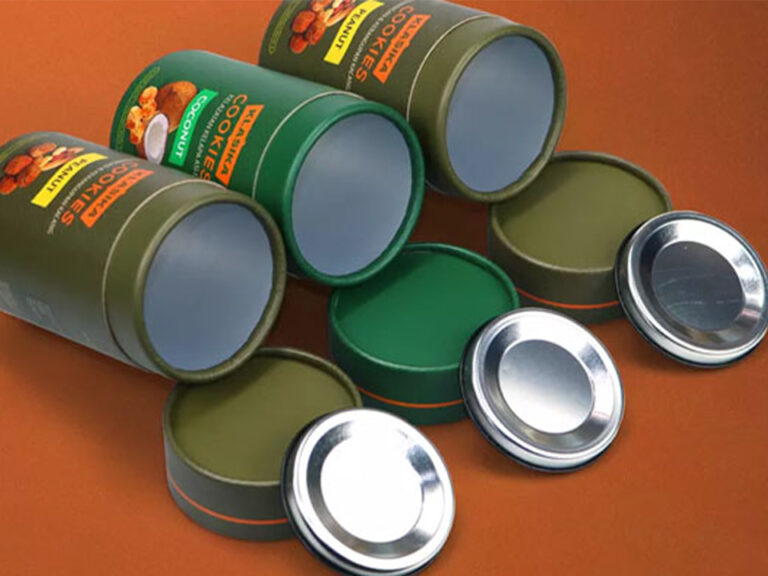
Rolled edges hide raw fiber. That’s the point. The rim gets curled and thickened, like a hem on fabric, which makes it feel smoother and more “finished” in-hand—especially for consumer-facing tubes where fingers rub the rim 20 times a day.
But here’s the ugly truth: rolled rims can drift. Curl stations wear. Operators get lazy. The curl springs back differently at 55% vs 75% RH. And suddenly your “paper tube end caps” that were snug in sampling are either too tight (scuffing, split shoulders) or too loose (rattle city).
Straight cut means the tube is cut square and left as-is (sometimes sanded, sometimes sealed, sometimes… shipped raw because the factory’s trying to save 0.3 cents). It’s brutally honest. If your winding tension sucks, the cut will show it. If your blades are dull, hello fuzz and “paper dust.”
It ships denser, though. And when you care about repeatable fit, straight cut can be your friend—if you control the edge finish.

But wait—rolled or straight where?
I’ve watched buyers request “rolled edge paper tube” and never state whether that applies to the cap, the body, or both. That’s how you end up with cap rims you didn’t want, body rims you didn’t approve, and a supplier shrugging like “that’s standard.”
Here’s my bias, and I’ll own it: rolled edges belong where humans touch; straight cuts belong where geometry matters. That doesn’t mean “cap rolled, body straight” every time. It means you choose based on closure type and the liner stack you’re squeezing.
If you’re stacking something like 20 µm aluminum foil + 12 µm PET under a lid, you don’t want a squishy, inconsistent rim. You want compression you can measure. If you’re selling a gifting tube where the customer runs a finger around the rim and decides if you’re “cheap,” then rolled edges earn their keep.
And yes—adhesives matter. A lot of tube plants run polyvinyl acetate glue (PVAc, (C4H6O2)_n) or EVA hot-melt on the seam; PVAc cure + humidity swings is where raw cuts start behaving badly (fray, delam, fuzz).
If you want category context, compare how “feel” and closure expectations shift across paper canister packaging, kraft paper tubes, and coffee paper tubes. These aren’t the same jobs.

Yet the edge decision isn’t happening in a vacuum.
Rolled edges are equipment-dependent—curl stations, jigs, setup skill—so if your supplier is under-capacity or quietly subcontracting rim work, your lead time turns into a moving target and your lot-to-lot variation gets spicy (in the bad way). Straight cuts are faster and simpler, but they punish sloppy tooling and bad paperboard.
Now add shipping chaos.
In January 2024, container rates spiked hard as Red Sea disruption forced reroutes; one data point put Shanghai–Europe at $3,103 per 20-foot container, up 8.1% week-on-week, and Shanghai–U.S. West Coast up 43.2% week-on-week to $3,974 per 40-foot container. Days later, a carrier CEO warned the disruption could last months, with commentary that freight rates had more than doubled since early December (per Drewry’s index).
So what?
Here’s the practical thing: rolled rims are easier to deform and harder to protect. Rim crush + ovalization = caps that don’t seat, lids that pop, tubes that “look used” right out of the carton. Straight-cut tubes pack tighter and tolerate stacking better—assuming your edge finish isn’t shedding fibers into the product.
And don’t sleep on duties. If you’re importing into the U.S., you should be tracking trade actions like oxygen—because classification and additional duties can shift, and the official home for Section 301 actions is right there. I’m not saying you’re automatically exposed. I’m saying: if you don’t ask, you’ll find out the expensive way.
| Decision lens | Rolled edge (cap) | Straight cut (cap) | Rolled edge (body) | Straight cut (body) |
|---|---|---|---|---|
| Hand-feel / perceived quality | High | Medium (depends on sanding/seal) | Medium | Low–Medium |
| Fit repeatability (large lots) | Medium (curl variability) | High | Medium | High |
| Dust / fiber shedding risk | Low | Medium–High | Low–Medium | Medium–High |
| Seal behavior with liners (foil/PET) | Medium (softer rim) | High (square compression) | Medium | High |
| Damage sensitivity in ocean freight | Medium–High | Medium | High | Medium |
| Typical “gotcha” defect | Rim ovalization | Sharp edge / fray | Curl spring-back | Edge fuzz + delam |
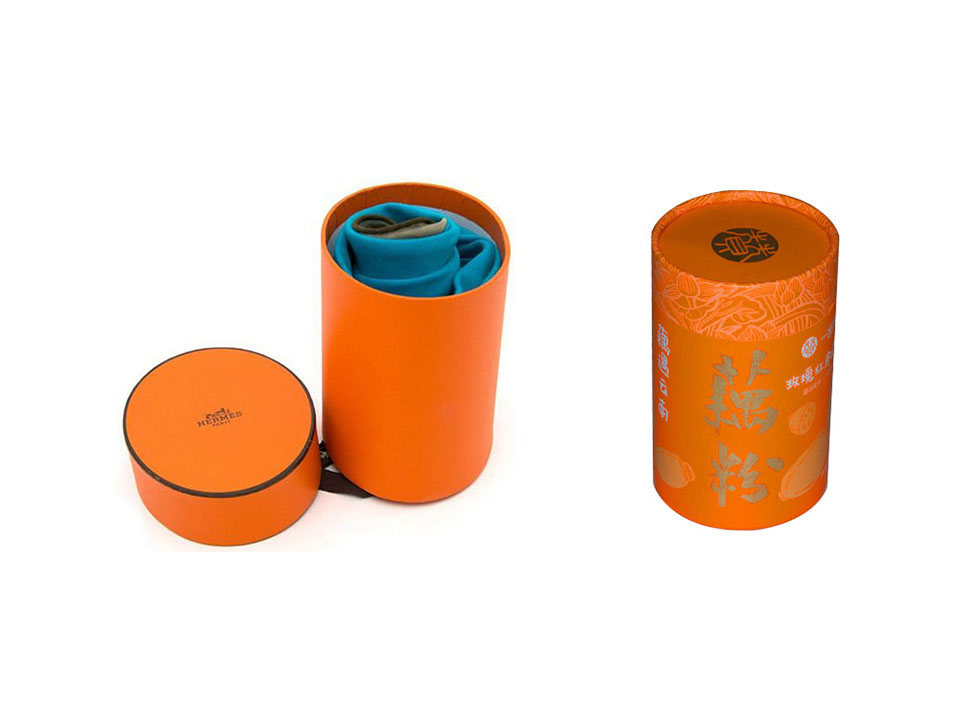
If you’re doing premium gifting or anything that’s basically a “touch test,” like candle paper tubes, rolled edges can be worth the added fuss.
If you’re doing regulated closure behavior—say child-resistant tubes—I’m not romantic about it: you’re buying repeatability, and straight edges can make validation less of a coin flip.
Child-resistant isn’t a tagline. It’s test math.
U.S. rules under the Poison Prevention Packaging framework require effectiveness targets (for example, not less than 85% child-resistant effectiveness under specified conditions, with methods spelled out in the regs). If your closure relies on friction plus rim geometry, edge choice affects whether you can pass reliably across lots, aging, and humidity cycles.
And if you think packaging enforcement is toothless, you haven’t been paying attention to how quickly things get pulled once complaints stack up. The U.S. Consumer Product Safety Commission FY2023 annual reporting lays out recall throughput and fast-track patterns that can turn “small defect” into “public problem” faster than your team can draft a statement.
However, Europe is tightening rules with actual timelines. The EU’s PPWR materials shared by the European Commission point toward recyclability requirements tied to packaging placed on the market after 2030.
That matters for edge treatments because “fixing” a straight cut by adding coatings, heavy laminations, or reinforcement rings can turn your recyclability story into paperwork soup. Sometimes the simplest rim construction that still protects product is the best business decision—even if it’s less Instagrammable.
One long sentence, because that’s how this goes in the real world: specify the edge type separately for cap and body, lock in engagement depth (mm) and pull-off force (N) with acceptable variance, define edge finish (raw vs sanded vs sealed with coating type and gsm), state liner stack by material and thickness, demand AQL and a basic destructive test plan (ovalization + drop at 1.0–1.2 m), and control packout (rim protectors, layer pads, max stack height, humidity). Write it down.
If you’re not sure how to turn that into an RFQ that suppliers can’t wiggle out of, the fastest path is contact our team with your tube diameter, height, liner stack, and target markets.
What are the different edge types for paper tubes? Paper tube edge types are the rim geometries used on the tube body and its paper tube end caps, typically split into rolled (curled/beaded) edges that fold material over to hide raw fiber and add rim thickness, and straight cut (flat) edges that are cut square and left exposed or lightly finished for consistent geometry. In practice, factories will add sanding or sealing steps, but the behavior is still basically “rolled hides fiber, straight shows quality.”
How to choose paper tube cap edge type? Choosing a paper tube cap edge type means selecting a rim geometry—rolled or straight cut—that matches your closure mechanism (friction, shoulder/neck, telescoping), your liner compression needs, and your damage tolerance in shipping, because rim thickness and raw fiber exposure directly change fit repeatability, dusting, and deformation under load. If a supplier can’t talk in numbers (mm, N, AQL), they’re selling vibes.
Is a rolled edge paper tube “stronger” than a straight cut paper tube? “Stronger” in paper tube rims means higher resistance to fray, finger abrasion, and localized crushing at the rim during handling and freight, and rolled edges often win on feel and fray control because they bury fibers, while straight cuts often win on dimensional consistency because they avoid curl variability and spring-back. Decide what you’re measuring: fray, ovalization, or fit drift.
Do edge types affect sealing performance with foil liners? Edge types affect sealing because the rim is the compression interface: straight cut edges provide a flatter, more repeatable surface for gasket or liner compression, while rolled edges add thickness and softness that can reduce peak compression pressure and create variability if the curl isn’t uniform, especially across large production lots. If you care about “airtight,” run leak tests—don’t argue in meetings.
Why do child-resistant tubes care about cap and body edge design? Child-resistant packaging is packaging designed to be significantly difficult for children under five to open within a reasonable time while remaining usable for adults, and in U.S. frameworks it is validated through defined test methods and effectiveness thresholds, meaning closure friction, engagement depth, and rim geometry must stay stable across production and aging. Edge drift is closure drift. That’s where approvals go to die.
How does sourcing location change the risk for paper tube caps? Sourcing risk for paper tube caps is the combined probability of cost shocks, lead-time drift, and quality variance driven by region-specific capacity, equipment maturity, shipping routes, and trade policy exposure, so an edge type that requires extra stations (rolled rims) amplifies the downside when freight spikes or process control varies across subcontracted steps. If your margin can’t handle surprises, design like surprises are guaranteed.
If you’re buying Paper Tube End Caps and you don’t have an edge spec, you’re not being “flexible.” You’re gambling.
Send a short brief through Nous contacter with: diameter (OD/ID), closure type, liner stack, destination market (US/EU/UK), and your target drop test. I’ll tell you—plainly—whether rolled rims are worth paying for, or whether you should cut square and spend money on the stuff that actually prevents failures.